Guidance on Family Law from our expert family law solicitors here at Evolve Family Law in Manchester & Cheshire.
We put a lot of family law legal information on our website and if you have a single question about your situation, you should find an answer in this comprehensive collection of advice & guidance on all areas of family law.
If you need a greater level of help, please contact us and one of our team will call you to make an appointment.
If you are in an abusive relationship then you may think that during the coronavirus outbreak there is no help available and that you’re ‘’on your own’’. Although all this talk of self-isolation and social distancing may make you feel like that, the message from family law solicitors is that ‘’you are not alone’’. There is help available during the coronavirus outbreak if you are in an abusive relationship. In this blog we look at your legal options if you are caught up in an abusive relationship and need help to get out of it during the coronavirus outbreak.
Online domestic violence and family law solicitors
Although law offices may be closed because of Covid-19, Cheshire and Manchester based Evolve Family Law solicitors are working online to support those at risk of domestic violence needing help to leave an abusive relationship during the Covid-19 lockdown. If you need legal assistance call us or complete our online enquiry form to set up a video conference or telephone appointment.
Coping in abusive relationships during the coronavirus outbreak
If your partner is abusive towards you then it is difficult enough to cope when life is ‘’normal’’. For many the fact that partners are now either working from home or not able to work, and so are based at home full time, is particularly hard. There is no escape from home for you to visit friends or family or go off to work.
Tensions can also be increased by your partner’s health or financial anxieties about Covid-19, their lack of ability to go to the pub or to the gym to meet up with their friends and the presence of the children twenty four hours a day at the family home.
The government has said that it wants Covid-19 to bring out ‘’the best in us’’. That is a laudable aim but sadly domestic violence organisations and family law solicitors know that, for some families, domestic abuse may increase because of having to spend so much time with a partner. Alternatively, partners who haven’t previously been abusive may snap and either lash out or become very coercive and controlling.
When you hear that the police are cracking down on people leaving their homes it may make you reluctant to leave or seek help from domestic violence organisations or family law solicitors but, coronavirus or not, if you are in an abusive relationship you should seek help.
Those people who are contacting us about abusive partners are often reluctant to acknowledge the extent of the abuse and prefer to minimise some of the partner’s behaviour, especially if it falls short of physical violence and involves coercive control such as:
Dictating what you can eat
Saying when you can watch the TV and what programmes you can watch
Checking your mobile phone or internet usage
Restricting when or if you can go out for your daily exercise or for essentials like food shopping
Forcing you to have sex
Not allowing you any freedom within your house by insisting on being in the same room as you
Listening into your phone calls to friends and family.
As the restrictions on the movement of people continues in force because of the Covid-19 pandemic the sort of coercive controlling behaviour that you could cope with when one or both of you were out working can become intolerable. However, there is help available.
Help if you are in an abusive relationship
The police, domestic violence organisations, the family courts and online family law solicitors are continuing to offer help to those trapped in an abusive relationship.
If you or your children are at risk of immediate harm then you should call the police. The police understand that the risks of domestic violence are increased during the current crisis. They may be able to arrest your partner. If the situation is so serious that you can't wait for the police to arrive you can leave with your children as the authorities will accept that leaving an abusive relationship is an emergency and that is an exception to the requirement to stay indoors.
In addition to the police there are various domestic violence organisations who are open and available to help and offer support:
The National Domestic Violence Helpline – 0808 2000 247
The Men’s Advice Line – 0808 801 0327
The Mix, information and support for under 25s in the UK – 0808 808 4994
The National LGBT+ Domestic Abuse Helpline – 0800 999 5428
The Samaritans – 116 123
In addition to police and domestic violence organisation help the family court and domestic violence solicitors are open to help you if you need court protection in the form of an injunction order.
[related_posts]
Injunctions against domestic violence during the Covid-19 outbreak
You may have read that most courts and public offices are closed. Whilst that is correct the family courts are open for remote emergency hearings including applications for:
Non-molestation injunction orders
Occupation orders
Emergency child arrangements orders and other types of children orders to safeguard and protect children.
Therefore, if you are in an abusive relationship, there is help available from the family court. Don’t worry that you may not be able to get to see a family law solicitor. Even prior to the coronavirus outbreak many family law and domestic violence solicitors were used to taking instructions by phone appointment or video conference and used to conducting court hearings remotely.
That isn’t to say that things are a bit of a challenge but if you need help then both the court and family law solicitors are just a phone call away.
If you need protection then a family law injunction order may be your best option. There are two types of family law injunction order:
A non-molestation order – to stop your partner from being physically violent or aggressive or verbally abusive or exerting coercive control over you
An occupation order – to stop your partner from returning to the family home (if he/she has left but is threatening to return to the family home) or to make your partner leave the family home or to restrict him/her to certain parts of the family home.
The court and family law solicitors also recognise that you might need help if you are living with extended family and are being subjected to domestic violence or coercive control or that you may need help with your children and need the security of a children order, such as
A child arrangements order
A specific issue order
A prohibited steps order.
It is often the case that people suffer in silence when they live with an abusive partner or they think that what they are coping with isn’t ‘’bad enough’’ to get help. Since the Covid 19 rules on restriction of movement have come in many have thought that they are trapped in an abusive relationship for the duration of lockdown. Domestic violence organisations, the police, courts and family law solicitors are saying that domestic violence and abusive behaviour isn’t right in any circumstances and that if you need help then call.
Online family law solicitors
The specialist family lawyers at Evolve Family Law can help you if you are in an abusive relationship and you need legal help. Call us or complete our online enquiry form for a video conference or telephone appointment.
Update 24th March 2020:
In UK government guidance published 24 March, it states:
Where parents do not live in the same household, children under 18 can be moved between their parents’ homes
https://www.gov.uk/government/publications/full-guidance-on-staying-at-home-and-away-from-others/full-guidance-on-staying-at-home-and-away-from-others
Whilst parents may wish or need to adapt contact arrangements, they can, and should still continue for children. These are frightening times for children and maintaining normality will hopefully help quell their fears. Now, more than ever, parents should put aside their differences and co-operate and act in their children’s best interest at all times.
This advice should be read in conjunction with the following Government advice on what to do if someone in your household becomes unwell:
https://www.gov.uk/government/publications/covid-19-stay-at-home-guidance/stay-at-home-guidance-for-households-with-possible-coronavirus-covid-19-infection
Parents want to protect their child and that is particularly true when it comes to the coronavirus. It is hard enough coping with the worries of looking after your children and safeguarding them in normal times but in a pandemic the job of being a parent has just got so much harder. That is the case whether you are living with your partner, separated or divorced. In this blog we look at the question of coronavirus and child contact after a separation or divorce.
Online children law solicitors
Evolve Family Law are based in Cheshire and Manchester but offer a full range of online children law services with appointments available by telephone appointment, video conference or Skype. If you need legal help with child custody and contact please contact us.
Stopping Child Contact Because of Coronavirus
We are receiving a high number of enquiries asking us whether child arrangements can continue now the government has restricted our movements. We are getting a real sense that the vast majority of these parents aren’t wanting to stop contact to upset their ex-partner or trying to use Covid-19 as an excuse to stop contact visits that they don’t like, but because they genuinely fear for their children and their families. At the moment the advice from the government agency, CAFCASS, is to continue contact arrangements as normal as CAFCASS thinks it is in the best interests of children to maintain contact so the children keep to a familiar routine, even if they are missing out on going to school.
Whilst some may say that statistically children should be OK even if they get the coronavirus that doesn’t ease parent’s anxiety and fears that children going back and forth between households could increase the risk of spreading infection to a member of your family who is in a high risk group with an underlying health condition and is therefore more vulnerable to Covid-19.
There is also a concern being expressed by parents about what might happen if a child is on a contact visit and the other parent falls ill and the family has to self-isolate or if the country goes into lock down and children can't travel back to you.
One of the issues facing separated or divorced parents is that not everyone is as worried about Covid-19 as some are. That can create feelings of tension and acrimony between parents who are living together with their children, let alone separated or divorced parents where there may already be an element of mistrust or a history of communication problems.
Cheshire children law solicitors say that if you want to stop contact because of the coronavirus and high risk issues then whether you can legally do so will depend on whether there is an existing child arrangements order in place and what it says. If you have an existing child arrangements order and you don’t know if you can stop contact or not then it is best to take legal advice.
Coronavirus and Child Arrangements Orders
If you have a child arrangements order in place that sets out the parenting arrangements for your child then if you stop contact you are likely to be in breach of the court order. Your ex-partner could apply to enforce the child arrangements order and you could apply to vary the child arrangements order.
If you are following government advice to self-isolate because a member of your family is unwell then your ex should not apply to enforce an order and you should not need to apply to vary the child arrangements order because of your self-isolation. However, if it isn’t a self-isolation or lockdown situation, but you want to change or stop contact arrangements because of the coronavirus and any high risk concerns, you may need to look at what your child arrangements order says and your ex –partner may want to apply for a child arrangements order so contact isn’t stopped.
Cheshire children law solicitors say that the use of children court proceedings should always be the ‘last resort’ and it is best to try to negotiate a change in a child arrangements by agreement.
[related_posts]
Sorting out contact during the coronavirus outbreak
It is all very well for children law solicitors to talk about trying to reach an agreement about stopping or changing contact arrangements but many parents say that it is far harder to do that in reality. That is certainly true but sometimes it takes a children law solicitor to cut through the parental history of mistrust and get to the real issues.
In these unprecedented times it is inevitable that parents will want to protect their children and to ‘wrap them up in cotton wool’. What parent wouldn't? However it is important for parents to take a step back and think that the coronavirus pandemic won't be with us for ever and that when the UK comes out of the current crisis you still want to be on speaking terms with your ex-partner or at least be able to communicate with them over the parenting arrangements.
Therefore, if you are contemplating stopping or changing contact Cheshire children law solicitors recommend that you:
Think about the reasons why you want to stop or change contact. Can contact still take place through reducing risks , for example , by you driving the children to contact rather than older children or the other parent using public transport to get to your ex-partner’s house or can you change the contact drop off point
Consider if you can agree consistent rules on what the children can do during their time with the other parent. That way one parent isn’t doing all the home schooling and enforcing a curfew and activity restrictions for older children whilst the other parent carries on as normal
Think about the alternatives to direct contact, such as facetime or Skype or phone. Bed time stories by facetime maybe something small children would love and the offer of such contact might reassure your ex that you aren’t trying to cut them out, but you want they want; happy and healthy children
Take legal advice as sometimes an experienced children law solicitor can help you find resolutions that you had not thought about or help you with the words to help your ex understand why you are so particularly worried about coronavirus and child contact. It can undoubtedly be hard for an ex-partner to hear that you want to stop or reduce contact when they and the children haven’t done ‘anything wrong’ and seeing the children is helping them get through the coronavirus outbreak. However, this is a time when a children law solicitor can help you both focus on what is best for the children, whether that is getting you help with your fears, or helping your ex-partner to understand any particular high risk issues.
Online Children Law Solicitors
Evolve Family Law provide a full range of online children law services with appointments available with specialist children law solicitors by telephone appointment, video conference or Skype. If you need legal help call us or contact us online
When most of us see headlines about compensation we think that the newsworthy case must be a civil claim for compensation arising out of a road traffic accident or medical negligence. However, in the news last week was a case on ‘divorce compensation’. In this blog we look at what is meant by divorce compensation.Cheshire Divorce solicitors
If you are in the process of a separation or divorce and want advice on a financial settlement then the family law team at Evolve Family Law can help you. Specialising in complex financial settlement claims and children proceedings, the friendly and approachable divorce solicitors, based at Holmes Chapel Cheshire and Whitefield North Manchester, can help you. Call us on 0345 222 8 222 or contact us online.Divorce compensation
Divorce compensation is in all the newspapers because of a case involving two solicitors. The couple had been married for about ten years and have two children together. The family wealth amounts to about ten million. The family judge ordered that the husband and wife should each get fifty percent, around five million each.
You may think that £5 million each is a just and fair award as after all the couple had been married for nearly a decade. However, the judge went onto order that the wife should get an extra £400,000 for what was termed by the judge as ‘relationship generated disadvantage’ or divorce compensation.
The judge made the additional £400,000 award because the wife and mother, a Cambridge law graduate, had sacrificed her career as a solicitor to look after the couple’s two children.
The court decision will be of interest to many as it is common for one partner in a relationship to step back from their career to become a house husband or wife or to try to juggle child care and home making with a part time career, thus losing out on job promotions and work bonuses. Often the philosophy is that either a husband or wife has to step back from their career as if they equally share the childcare commitment both careers will suffer.
In some family situations, where one spouse has a lower earnings capacity than the other, the choice may be painfully obvious as to who should take on the role of the main breadwinner. However, in the reported case both husband and wife started out their married life as qualified solicitors and both (rather than one) could have had stellar careers had it not been for the decision to forgo a career to look after the couple’s children.
Can I get divorce compensation?
When a case hits the headlines many people, lawyers included, think that divorce compensation will be the ‘new thing’ and that everyone will be claiming for relationship generated disadvantage. However, the judge in the recent court case, made it clear in his ruling that his decision in the case of the two unnamed lawyers should not open the floodgates to a plethora of relationship generated disadvantage divorce compensation claims. The judge said that relationship generated disadvantage claims should be limited to where there are truly exceptional circumstances.
How do I claim for relationship generated disadvantage?
Compensation for relationship-generated disadvantage can be included as part of your financial claim in divorce financial proceedings. You cannot claim for relationship generated disadvantage if you are in a cohabiting relationship.
The relationship generated disadvantage claim is made as part of your financial settlement claims and assessed at the same time as the judge decides on:
What the family assets are
What your needs and your spouse’s needs are (and if you have children what your children’s needs are)
How your family assets should be divided between you
Whether you should get the family home or if it should be transferred to your spouse as part of the financial settlement or sold and the proceeds divided between you
Whether you or your spouse should receive a share of the other’s pension as part of the financial settlement
Whether a clean break order should be made to prevent further financial claims
Whether spousal maintenance should be paid and, if so, for how long and how much should be paid.
There are a host of other things that a judge has to consider such as whether one spouse should pay towards the other’s legal costs or not.
Any claim for divorce compensation or relationship generated disadvantage will be added to the list of issues for the judge to rule on and to explain why he/she has allowed an additional award for relationship generated disadvantage or ruled it out in their court judgment.
In the case of the two solicitors it was clearly evident that the wife had given up a lucrative career to care for children and that she had a case to say, that with her qualifications, she could have enjoyed an equally stellar career as her husband had it not been for the fact that the arrival of children seriously damaged her ability to work in a demanding career as a solicitor.
You may take the view that with a financial settlement of around five million the wife did not need the extra £400,000 for ‘relationship generated disadvantage’ as the five million would more than meet her reasonable needs. However, the court has said in previous cases where divorce compensation arguments have been raised, that relationship generated disadvantage is relevant even if their future needs have been met generously through the financial settlement. That is because one spouse has given up their ability to generate an income surplus to needs and so in an exceptional case they can ask a judge to rule that their husband or wife should pay an element of ‘divorce compensation’.Cheshire Divorce solicitors
If you are separating or getting divorced and are worried about your financial settlement then whether or not you gave up your career you need expert legal advice on your best financial settlement options.
The family law team at Evolve Family Law can help you. Specialising in complex financial settlement claims and children law proceedings the friendly and approachable divorce solicitors, based at Holmes Chapel Cheshire and Whitefield North Manchester, can help you reach a financial settlement that works for you and your family. Call us on 0345 222 8 222 or contact us online .
Latest From Our Divorce Blog:
As a Cheshire children solicitor I get asked the question ‘can I stop my ex taking our child on holiday?’ That is understandable as most parents are anxious when their child goes off for the weekend, let alone a holiday with your ex. In this blog we answer your frequently asked questions about whether you can stop your ex taking your child on holiday.
Can I stop my ex taking our child on holiday?
Whether you can stop your ex taking your child on holiday will depend on:
Whether there is a child custody order(also known as a residence order or a child arrangements order). If so, does the order say whether your ex can take your child on holiday? If it does, then have circumstances changed so you can apply to court to vary or change the order to stop your ex taking your child on holiday?
Is the holiday in the UK or does your ex plan to take your child abroad? If a foreign holiday is proposed how long is the holiday for and what is the destination?
Are there any child abduction concerns that are making you particularly concerned about the holiday? For example, is your concern that your child is being taken to see extended family outside Europe and you have read and googled that the country they are going to isn’t signed up to the Hague Convention?
Prior to talking to a children solicitor about whether you can stop your ex taking your child on holiday it is best to think about the reasons why you object to the holiday. For some parents the answer is obvious, such as you fear child abduction whereas for others it is just a gut fear or your objection to the holiday may be down to:
The dates your ex wants to take your child on holiday – for example, do the dates clash with your Christmas, Easter or your summer holiday plans?
Who will be accompanying your child on holiday – for example, is your ex going on holiday with his new partner and their children. Are you worried about your child spending time with the new partner or them not getting on with the other children who will be going?
The destination of the holiday, as after all a holiday to an English Caravan Park or to European Beach holiday is very different to a trip to the Far East or middle East to meet extended family or for cultural reasons
Do you have concerns about your ex’s drinking habits and do you worry that if you are not there, your child will be neglected whilst your ex gets drunk
Are you angry that your ex can afford to take your child on an expensive holiday but can't or won't pay child support to you so you can't afford to go on a similar trip?
There are many other reasons why you may object to your ex taking your child on holiday but sometimes it helps to make a list as there may be more than one reason why you feel so strongly about the holiday. Some of those reasons may be practical ones and others may be emotional, for example, your ex is taking his new partner and your child on holiday to the same resort you all used to go to as a family.
I have a court order so can I stop my ex taking my child on holiday?
If a mother or a father has a court order saying that the child lives with them(for example a child arrangements order) then you can:
Stop your child going on holiday unless there is a child arrangements order in place for the other parent that covers holiday contact in the UK or overseas
If the holiday contact in the child arrangements order doesn’t cover travel abroad then your ex won't be able to take your child overseas on holiday unless they get your written agreement or a family court order that says they have court permission to take your child either to a specified foreign country for a holiday or a general order that says they can take the child on a foreign holiday each year.
Every children court order is phrased differently so if you are at all unsure about what your court order says and whether your ex needs your permission or a court order to take your child on holiday then speak to a Cheshire children solicitor.
Can I get a court order to stop my ex taking my child on holiday?
You can apply to court to get an order to stop your ex from taking your child on holiday. It is best to speak to a Cheshire children solicitor about whether you need to apply for an order as it will all depend on whether there are any existing court orders. If there are then it may not be necessary to make an application to court or you may need to apply to vary a court order rather than apply for a new court order.
For example, if your ex wants to take your child on holiday abroad and they don’t have a child arrangements order to say that they are the main carer the onus is on them to apply to court to get permission to take your child on a foreign holiday out of the UK unless you give your written consent to the holiday.
If you think that your ex will just take your child without bothering to apply for a court order then you can make an application to court for a specific issue or prohibited steps order prohibiting the holiday from taking place.
If your ex is your child’s main carer and they have a child arrangements order in place which says the child lives with them, then normally this order allows them to take your child on holiday abroad for up to four weeks. They therefore don’t need your permission to take your child abroad provided the holiday is for less than four weeks. However, if you object to the holiday (for example, because you fear child abduction) then you can apply to court for an order to prohibit the foreign holiday from taking place.
If your objection is to your ex taking your child on holiday in the UK then you can still apply for an order to try and stop the holiday although you would have to have good reason for the objection as generally speaking there is less opposition to a child being taken away on holiday in the UK unless, for example:
The child is young and hasn’t had a lot of contact with the other parent and so would be anxious and fret
The holiday is unsuitable, for example , a golf holiday where you anticipate your child will be cared for by your ex’s new partner rather than spend quality time with a parent
Your ex wants to go away on holiday at the only time that you can take off to go away on holiday or their holiday plans will mean that you don’t get to spend time with your child over Christmas or will stop your child from going to a family wedding or other celebration
Your ex is planning a camping holiday in the Autumn half term and your child is asthmatic or has special health needs.
[related_posts]
Should I object to my child going on holiday?
If a parent wants to object to their child going on holiday most people’s first thoughts are that a child should be able to enjoy a holiday with each of his or her separated parents. Whilst that is true it is also correct that if you have any concerns about your child then it is your job as a parent to protect your child and stand up for what is in their best interests.
Sometimes children don’t know what is best for them as whilst your child may be very excited about a trip to a far flung destination they won't understand your child abduction fears and the reasons behind why you are so worried about the holiday.
A Cheshire children solicitor will normally ask you to look at the reasons why you object to your child going on a holiday in the UK or overseas and to consider whether those reasons are about you or your child. For example, if your real issue is that your ex can afford a holiday but isn’t paying child support your children solicitor can make a child support application for you. If your issue is the destination of the holiday or its length then perhaps some compromise can be made so a holiday can take place but your child is safe.
If you need help with holiday contact or need a holiday contact order then our expert team of specialist children law solicitors at Holmes Chapel and Whitefield can help you. Call us or contact us online.
By guest blogger Anoushka Macin of Balance Psychologies
You have decided or it may have been decided for you that you no longer want to stay in a relationship that is tormenting you. Leaving a narcissistic relationship is one of the hardest things to do. In my work with clients and with my online community I provide lots of information to people who find themselves with a narcissist or toxic individual. Here is how to get out safely with your wellbeing intact.
When we fall in love it’s natural to attach and form a romantic bond, but once in love with a narcissist it is not easy to leave let alone detach from them.
Why it’s hard to break up with a narcissist
Pathological narcissists or people with narcissistic traits present as charming, interesting and seductive to be around and will treat you with kindness and warmth. They may even love bomb you. This is where the dysfunctional attachment to the narcissist begins. I am not saying that it is wrong that you are being treated with kindness, charm and respect at the beginning. Of course you want to be with them but you become easily dependent on their attention and validation of you.
Once you are hooked onto this they become secure and then they aren’t motivated to be nice to you. Their charm, warmth and respect fades and is replaced or intermixed with varying degrees of criticism, demands, coldness and emotional abuse. You become accommodating and try to win their love and attention back and meanwhile your self-esteem and independence of mind are compromised. You may even become gas lighted and begin to doubt your own decisions and perceptions due to blame and lies. When you question this you become attacked, intimidated and confused by manipulation.
Over time you learn to accept the abuse or even attempt to avoid conflict and become deferential. Because facing the reality is too painful. To leave is the only option as this behavior becomes a cycle of abuse and unfortunately you are too weak and vulnerable to be able to do anything about it. You cannot save them, only yourself. Below are some tips and strategies that may help you to cope and heal after leaving a narcissistic relationship.
Go no contact - limited no contact
Block them! I mean of all your communication avenues. That means phone, email and social media. You need some time to yourself to ‘breathe’ and get your thoughts in order. You are not going to be able to do that if you have constant abuse through secondary sources. The narcissist will try to contact you! You have to cut off this communication, you need some time to get your mind in order.
Now, this may not be as straight forward if there are children involved, so what I suggest here is limited contact. I feel that at the beginning of this process do go no contact but only when you are ready begin with limited contact and it needs to stay like that. So, what does limited contact look like? It will mean that you have to clarify what it is that you are communicating with the narcissist, be specific and stick to only the facts that you want to get across. Take the emotion out of the content that you are talking about, this will give you the advantage. Please know that the narcissist will use your triggers and emotions against you to trip you up and get what they want. As these interactions are about gaining power over you and controlling the conversation, to do that they need to initiate an emotional reaction out of you and will press your buttons. Be wise to this and prepare yourself accordingly.
Join a support group
It is really important at this time that you have support of people that understand and care for you. Having to explain your decisions to people who do not get it, is not good for you to be around them at the moment. You need to surround yourself with people who give you positive validation. Finding a therapist might be a good idea too.
Become more autonomous
To heal and move forward from an abusive relationship it is helpful to build a life outside of the relationship that includes separate friends, hobbies and other interests. When you leave you will need a fulfilling life to supplement or replace the relationship. You will need to surround yourself with positive things that will help you to heal and remind you that there is a life outside of this person and relationship.
Build your self esteem
This is very important, you will need all the strength that you need. It is important to reconnect with yourself and get to know you all over again. In relationships such as these your identity would have been compromised and diminished, therefore reconnecting to your own needs and values is important to build your inner strength. You will need to learn to become more assertive and build boundaries.
Learn how to nurture yourself
This follows on from the last point of reconnecting with yourself. Learning your needs and putting them first. This is really important if you have children as you will be teaching them to value themselves and to build a robust connection to self. This is a life skill and will insulate you from the abuse.
Grieve
Please allow yourself time to grieve the relationship and false future promises that were made to you in the relationship. This will help you to process your emotions and recover from the relationship. I would also urge you to find an experienced Manchester divorce solicitor who has the understanding and experience of dealing with narcissistic personalities. Mediation is not a good option where there is a history of abuse.
As long as you’re under the spell of the narcissist, they have control over you. In order to become empowered you will need to educate yourself. Come out denial and see the reality of what this really is. Information is power. Read up on narcissism and abuse, I have a lot of information on my website. Regardless of your decision, it is important for your own mental health and to redeem your autonomy and self-esteem.
By guest blogger Anoushka Macin of Balance Psychologies
[related_posts]
guest blogger Anoushka Macin of Balance Psychologies
A divorce court ruling on a Sharia law marriage has called into question the validity of Sharia law marriages conducted in the UK. You may question why that is important to you as, after all, if you celebrated an Islamic marriage ceremony, witnessed by all your friends and family that is what counts as you are married in the eyes of God.
Whilst our Manchester divorce solicitors would not disagree with the significance of the marriage ceremony to you, in the English family court you may not be legally married. Your status as a husband or wife or as a cohabitee could make the difference between whether you get half the family wealth or nothing if you separate.
The case of Mr Khan and Mrs Akhtar
The legal status of Islamic marriage in the UK is in the news headlines again because of the long running case of Mr Khan and Mrs Akhtar. In the high court Mrs Akhtar sought a divorce from her husband, Mr Khan. He opposed the divorce petition on the basis that they weren’t legally married. Although you would have thought it obvious that they were married because the couple had participated in a Nikah ceremony in a London restaurant conducted by an Imam with about 150 guests, Mr Khan said the marriage wasn’t legal as whilst it might be a legal marriage under Sharia law it did not meet the requirements of English marriage law.
The first judge ruled that the marriage was a marriage but classed it as a void marriage. This decision allowed Mrs Akhtar to start financial proceedings as the wife of Mr Khan, something that she could not have done if the high court had ruled that the couple were not legally married. Although the court ruled that the marriage was still a marriage (even though it was void) back in 2018 it has taken until February 2020 for the court of appeal to hear the case and conclude that the couple were not legally married under English law.
Interestingly the appeal wasn’t brought by Mr Khan but by the Attorney General who is joined as a party to court proceedings where the validity of a marriage is called into question. The court of appeal ruling is making Manchester divorce solicitors ask where the decision leaves Mr Khan, Mrs Akhtar and their four children and, just as importantly all those other husband and wife's who have celebrated a Nikah marriage ceremony recognised in Sharia and Islamic law but not under UK marriage law.
Is an Islamic marriage valid in the UK?
The court of appeal held that the marriage of Mr Khan and Mrs Akhter was invalid (rather than void) and therefore the Islamic marriage isn’t a legally recognised marriage, notwithstanding the 150 guests who attended to witness the marriage ceremony.
The court of appeal ruled that the Sharia law wedding wasn’t a valid marriage because the ceremony took place at a venue that isn’t registered as a wedding venue and therefore no registrar was therefore present to conduct the ceremony. Back in 2018, the high court took a different approach and ruled there was a valid marriage recognised in both Sharia law and under English case law because although the couple hadn’t complied with English marriage law requirements they both held themselves out as a married couple. The court of appeal said that this wasn’t enough as they both knew that they needed to participate in a registered civil marriage ceremony to comply with English marriage law.
[related_posts]
Does it matter if your Islamic marriage isn’t recognised in the UK?
You may question whether it matters if your Islamic marriage isn’t recognised in the UK family law as a valid marriage because, from your perspective, it is your marriage under Sharia law that is the important ceremony to you and your family. However, if you separate and you try to start divorce proceedings you may find yourself in the same position as Mrs Akhtar; told that there is no need for English divorce proceedings because you are not legally married under English law. That means, that for the purposes of your financial settlement, in English family law you will be treated as a cohabitee or unmarried partner.
If your marriage is legally recognised then within divorce and financial proceedings a husband or wife can bring financial claims for a share of:
The family home
Any other property you own – this property includes houses or commercial property owned in your joint names or in your sole name
Your business – your spouse does not need to hold shares in your company or to have worked in the business to be able to make a financial claim against business assets
Your pension – your spouse can claim a share in your pension even if your pension was set up prior to your marriage
Your savings and investments – your husband or wife can claim a share of your savings and investments even if they are owned in your sole name
Your income – a claim can be made for the payment of ongoing spousal maintenance.
By contrast, if you are an unmarried partner or cohabitee you won't be able to claim:
A share of your partner’s pension
Spousal maintenance
Any other assets unless you can prove that you are an owner of that property or that you were promised a share in the property.
If you have children with your partner you can try to claim housing provision and child support for your children but Manchester divorce solicitors say it is a lot harder to bring a financial claim if you are a cohabitee rather than a husband or wife whose legal status in recognised in English law.
What should I do if I have an Islamic marriage?
If you have an Islamic marriage and you are concerned that your marriage won’t be legally recognised in English law it is best to take legal advice from a Manchester divorce solicitor. A discussion about your legal relationship status does not commit you to making any decisions and is completely confidential.
Islamic marriages and prenuptial agreements
If your husband or wife does not want to participate in a legally recognised marriage ceremony because they appreciate the extent of the financial claims that can be made by a husband or wife on separation (in contrast to an unmarried partner) then one option may be to look at signing a prenuptial agreement to record a fair financial settlement should you separate at a later date. It is vital that you take expert legal advice before committing to sign a prenuptial agreement.
If you are concerned about the status of your Islamic marriage then whether or not you are contemplating a separation or starting civil divorce proceedings you should take legal advice on your situation and options. The specialist divorce law team at Manchester divorce solicitors at Evolve Family Law in Whitefield can help you.
Call our Whitefield divorce solicitors or complete our online enquiry form.
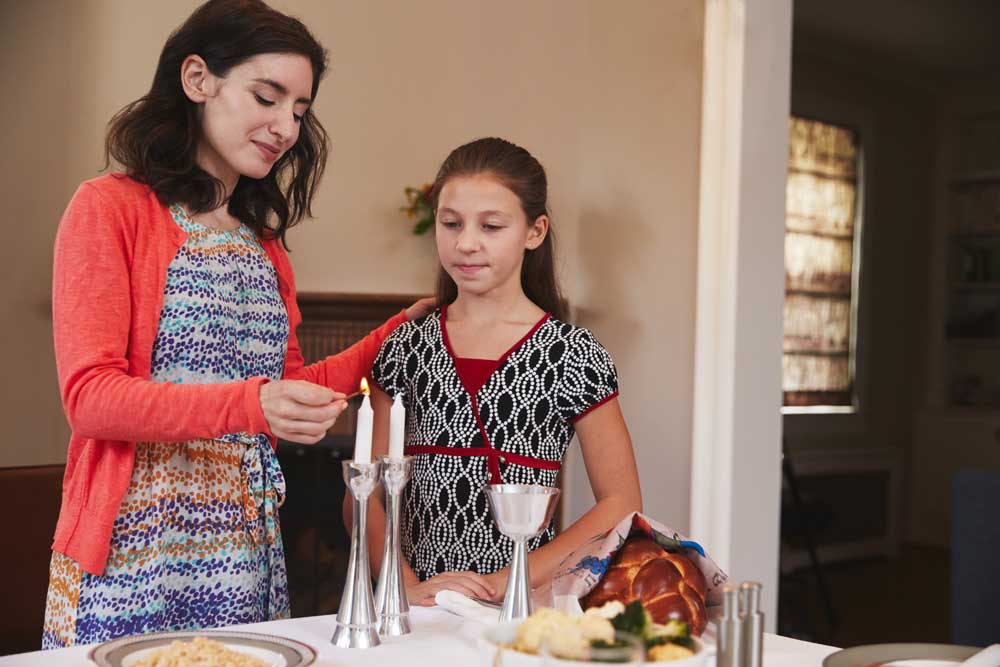
For many Jewish women the prospect of getting divorced not only makes them worry about how their children will cope, raises fear for their future financial security but makes them question whether they will end up in limbo, with a civil law decree absolute of divorce from the Manchester divorce court but no religious Get. A new case may bring hope to those worried about securing a Get after their separation and civil divorce.Manchester divorce solicitors
If you are divorcing and are worried about securing a Get or about negotiating the childcare arrangements for your children or your divorce financial settlement then the Manchester divorce solicitors at Evolve Family Law in Whitefield can help you. Call us on 0345 222 8 222, complete our online enquiry form or email robin@evolvefamilylaw.co.uk
Whitefield based Evolve Family Law solicitors are approachable and friendly, providing pragmatic expert divorce advice, financial settlement solutions and children law resolutions. Call us on 0345 222 8 222 and let the Whitefield divorce solicitors help you.Obtaining a Get
The law has tried to help those trapped having secured separation or a civil divorce but unable to move on with their lives because they are not able to secure a religious divorce or Get. In what is being described as a landmark case, a woman has used legislation designed to protect victims of domestic violence to secure her Get. In this blog we look at how she achieved her Get and the alternatives to her course of action.
Obtaining a Get by private prosecution
An unnamed women from London obtained her Get after launching a private criminal prosecution against her husband for coercive control.
The case is thought to be the first time that the UK criminal justice system has been used as a means to secure a Get to enable the London woman to be able to remarry according to Jewish law.
If you are wondering about what the judge and jury said, this is a case where the private prosecution of the husband was withdrawn when he agreed to give his wife a Get. That meant his crown court trial didn’t take place and therefore the jury did not have to assess whether the man was guilty or innocent of the law against ‘coercive control’.
The wife used Section 76 of the Serious Crime Act 2015 to bring the private prosecution. The 2015 Act created a new offence of coercive or controlling behaviour in an intimate or family relationship. An offence is committed if:
A person repeatedly or continuously engages in behaviour towards another person that is controlling or coercive and the two people are personally connected
The person committing the behaviour knows or ought to know that their behaviour will have a serious impact and the behaviour does have a serious impact on the person subjected to the behaviour.
To be charged with an offence under the 2015 Act you must have committed controlling or coercive behaviour towards a ‘personally connected’ person. The law says you are personally connected if:
You are in an intimate personal relationship or
You live together and are family members or
You lived together and were in an intimate personal relationship with one another.
Had the husband been found guilty of the criminal charge then he could have faced a maximum sentence of up to five years in prison. That was probably a very powerful motive to agree to give the wife a Get. However, some may argue that the Get was not freely given by the husband as he felt under pressure to provide the Get rather than offering it of his own free will.
Obtaining a Get through injunction proceedings
In the London case a private criminal prosecution was launched but the case is making Manchester divorce solicitors question whether a Jewish woman could apply for a civil or family court order alleging coercive control as a means to try and secure co-operation and the granting of the Get.
Many women assume that they cannot apply for a family court injunction order because their husband has not been violent towards them, or if he has it was ‘just a push or a slap’. The law on domestic violence is clear, domestic abuse includes emotional and psychological abuse as well as coercive and controlling behaviour. In addition, any form of domestic violence is unacceptable.
Accordingly, some women may want to consider if injunction proceedings would help provide leverage to secure their Get, in the same way that the wife used her private criminal prosecution to achieve her goal of freedom and an end to her being in legal limbo.
Obtaining a Get through UK divorce law
For a wife who wants to secure a Get but their husband is not co-operating the most widely known legal option is to use Section 10A of the Matrimonial Causes Act 1973, amended by the Divorce (Religious Marriages) Act 2002).
Under this legislation either a husband or wife is entitled to apply to the divorce court for an order stopping the decree absolute of divorce from being pronounced until the Get is obtained.
In another recent court case, spousal maintenance law was used as a means to achieve a Get. A Manchester businessman appealed against a financial court order made in divorce court proceedings. The court had ordered him to pay spousal maintenance at the rate of £1,850 a month until he gave his wife a Get.
The husband, Mr Moher, appealed saying it was wrong to order him to pay spousal maintenance until he gave his wife a Get because it introduced compulsion and, under Jewish law, a Get should be given of your own free will. The court of appeal disagreed and upheld the spousal maintenance order.
Talk to your divorce solicitor
If you need a Get then it is important that you tell your Manchester divorce solicitor this so that they know, in any negotiations, just how important the Get is to you and to your future happiness.
Once your Manchester divorce solicitor understands that you need the Get to re-marry under Jewish law and to have more children then this should be a priority for them. Even if your husband says he will cooperate and give you a Get or you do not contemplate re-marriage, it is still important to record the agreement on securing a Get in case your husband decides not to co-operate.
Robin Charrot, divorce and financial settlement solicitor at Evolve Family Law based in Whitefield, Manchester says:
‘’ Obtaining a Get can sometimes be hard work when a husband refuses to cooperate or prevaricates. It is vital that your divorce solicitor understands the importance of the Get to you. I have had solicitors question why it is significant to obtain a Get if a wife has achieved a civil UK law divorce as well as sorted out a child arrangements order and her divorce financial settlement. From my perspective, if a client wants Get it means the difference between a wife being able to get over her divorce and move on with her life feeling positive about her future and feeling trapped and forever controlled by her former husband. That is why the Get is so important and why the London landmark private prosecution will generate a lot of interest in Whitefield and North Manchester. It is another option to explore to secure your Get.’’Manchester Divorce solicitors
If you are contemplating a separation or starting civil divorce proceedings but are worried about obtaining a Get then Manchester divorce solicitors at Evolve Family Law in Whitefield can help you. Call the Whitefield divorce solicitor us on 0345 222 8 222, complete our online enquiry form or email robin@evolvefamilylaw.co.uk
Whitefield based Evolve Family Law solicitors are approachable and friendly, providing pragmatic expert divorce, children and financial settlement law advice. Call Evolve Family Law on 0345 222 8 222 and let us help you.Latest From Our Marriage & Divorce Blogs:
When it comes to pension rights and answering the question ‘do I have to share my pension if I divorce,’ the frustrating response to hear from a Manchester divorce solicitor is that there isn’t a yes or no answer to your pension rights question. In this blog we look at just how complicated it can be to unravel pension rights on divorce and answer some of the common questions that are raised by husbands or wives worried about the thought of having to share their pension on divorce.
Pension and divorce experts
Our Manchester divorce solicitors are often told by husbands or wives that their pension can't be shared on the breakdown of their relationship for a whole variety of reasons including:
The pension can't be touched until I retire so can't be shared now
The pension was started before the marriage
The pension is linked to the family business
You can't share a final salary pension on divorce
The pension isn’t valuable enough to share on divorce
My employer won't let me share my work pension on divorce
Pensions can't be shared if you are in a civil partnership and not married.
All of those are wrong! If you start off on ‘the wrong foot’ with misinformation about pension rights on divorce it is very easy to either:
Believe your pension can't be touched and therefore be unwilling to negotiate on pension rights and divorce
Assume that your husband or wife's pension can't be worth much and is incapable of being divided or shared until you both reach retirement age.
To avoid reaching fixed views on pension rights and divorce it is best to take early legal advice from Manchester divorce solicitors and financial advice so you know where you stand legally and financially. Early advice means neither of you should have entrenched pension positions and be more open to negotiating a financial settlement that may or may not involve sharing pensions.
Joint pensions
Many husband and wife's assume that their pension is a joint pension with their spouse. A Manchester divorce solicitor or financial advisor will tell you that a pension is only legally owned by one party so technically the pension will belong to you or to your spouse. Even though you may or may not own the pension, on divorce most pensions are capable of being shared so that the non-owning husband or wife gets a share of the pension.
Pensions can be a complex topic as there are so many different types of pension. You may be adamant that your pension is joint with your husband or wife because:
You are both shareholders and company directors in a family business and have a pension linked to the business
You both set up private pension schemes at the same time
You have property or land owned in a pension fund.
No pension is a jointly legally owned asset. Even if you and your spouse both have funds in a SIPP or own a business property within a pension fund you will both have individual shares in the pension pot.
Although pensions are not joint assets because they are not legally owned by both of you they will normally be taken into account in any divorce financial settlement and can be shared or the pension value offset against the value of other family assets.
Are pensions ever ignored in divorce financial settlements?
In most separations and divorces pensions are not ignored in the divorce financial settlement. That is because the pension is often the most valuable asset after the equity in the family home.
There are a few limited family scenarios where the value of the pension won't feature highly, for example:
A young couple with no children
A very short marriage with no prior period of cohabitation before marriage and no children
A marriage where the husband and wife agreed to ignore the value of pension assets if they separated or divorced by signing a prenuptial agreement or a postnuptial agreement. This is OK if the terms of the prenuptial agreement or postnuptial agreement meets the needs of the husband and wife.
Are pensions always shared equally?
Pension assets may not be shared at all, for example, you may agree or the family court may order that one of you gets a bigger share of other assets, such as the equity in the family home or savings.
If you do agree to a pension share or the financial court order includes a pension sharing order then your husband or wife could get a percentage from one to a hundred percent of your pension fund.
The court is more likely to make a financial court order that includes pension sharing where:
The value of the pension funds makes it worthwhile to share the pension. If the pension only has a small value then the administrative costs of sharing the pension may not be justified
There are sufficient assets to not require one of you to need to receive all or the majority of the equity in the family home to rehouse yourself and to offset the value of the pension.
Even if you and your spouse or the family court orders that a pension is split equally between husband and wife that doesn’t necessarily mean that you will both get the same amount of pension income from your equal share of the pension fund. The pension income differential can be down to age or gender. That is why many Manchester divorce solicitors and family courts prefer to arrange for pensions to be shared to achieve equality of pension income on retirement rather than a straight equal division of the capital value of the pension fund.
How to value a pension in a divorce financial settlement
It is often thought by a husband or wife that valuing a pension in divorce and financial settlement proceedings is easy as you can just rely on the annual statement that pension administrators provide. Most of these annual pension statements will include what is said to be the ‘cash transfer value’ of the pension fund.
If the fund value of the pension is accurate then you may think it is a straight forward process to either agree a pension offsetting figure (the amount that one of you will receive for not getting a share of the pension) or agree the percentage of the pension share. However, the cash transfer value of a pension can be wildly inaccurate or misleading. For example, two pensions may both have a cash transfer value of £500,000. You would assume therefore that as both pensions are worth the same amount they will produce the same pension income on retirement. That’s not the case because one pension may be a final salary pension and the other a personal pension or a SIPP.
Getting expert legal advice and actuarial pension advice can be crucial in helping you:
Accurately value your pension assets
Reach a fair financial settlement.
Can I ring fence my pension and leave it out of the financial settlement?
Manchester divorce solicitors are often asked if pensions can be kept out of divorce financial settlements. Even if you both agree to ignore the value of a pension the asset still needs to be disclosed. A husband and wife are under a duty to provide full financial disclosure. Failure to give information about your pension isn’t in your interests. If you do not disclose an asset then any agreement or financial court order could potentially be overturned at a later date because of the lack of full and accurate financial disclosure.
It therefore pays to disclose the existence of all assets, including pensions, even if you and your spouse chose to ignore the value of the pension in your financial settlement negotiations.
Many husband's and wife's struggle with the idea that the value of their pension may not be ignored in the financial settlement, even though:
They started the pension before the marriage and all the pension contributions were made prior to the marriage
Their pension is in payment
Their spouse is in a new relationship and so they don’t think that he/she needs a share of their pension
They signed a prenuptial agreement to say that the value of a pension would be ignored.
Whilst all of the above point are very valid, a family court looks at a range of factors when deciding whether or not to make a pension sharing order as part of a financial settlement. For example, the court will look at both a husband's and wife's needs including pension income needs but will also factor in the length of your marriage, your ages and any pre-marriage contributions or wealth and the existence of any prenuptial agreement or postnuptial agreement.
When is a pension shared?
Many husband's and wife's are very keen to avoid a financial settlement that includes a pension sharing order because they mistakenly believe that their spouse will continue to receive the benefit of their hard work and ongoing pension contributions and pension growth from the date of the financial settlement until eventual retirement and pension draw down. That isn’t the case.
If you agree to your pension being shared or the court makes a pension sharing order after a contested financial settlement court hearing then:
The pension sharing order will be implemented after the pension administrators receive the financial court order, pension sharing order annex and the decree absolute of divorce. The pension administrator has four months from receipt of the relevant paperwork to implement the pension sharing order
Once the pension sharing order has been implemented there will be two separate pension pots (assuming there isn’t a one hundred percent pension sharing order) and any future pension contributions made by you after the order has been implemented will be credited against your pension pot and you will get the benefit of all the pension and investment growth in your pension pot
In most cases you will be able to decide when to take your pension completely independently of when your former husband or wife choses to retire and get the pension income from their share of the pension. The position is more complicated if your pension pot consists of property and is a Self-invested pension plans (SIPPs) or is a Small self-administered schemes (SSASs). It is also sensible to take detailed advice about the earliest date you will be able to take the pension income as the pension rules may be different for you and your former spouse and it is best to be fully informed before agreeing to a pension sharing order.
[related_posts]
Should I pension share or pension offset?
The question of whether you should pension share or offset is really down to your priorities. However, if you are not able to reach a financial settlement with your husband or wife by agreement then the decision over whether to pension share or pension offset may be taken out of your hands as a family judge will decide how your assets , including pensions, should be divided.
If you agree to a pension offset then the value of the pension is offset against other assets owned jointly or individually. This may be vital to you if your priority is to stay in the family home or to keep your shareholding in the family business or family farm. Equally, it can be short sighted to ‘put all your eggs in one basket’ and just get equity in the family home rather than a share of your spouse’s pension.
You may think that, in time, you can downsize and get money out of the family home to fund your retirement. However, the cash from the sale of a family home may not generate anywhere near as much in pension income as a share in your spouse’s final salary pension scheme would have.
Alternatively, you may be adamant that you want to keep one hundred percent of your pension because you realise just how valuable your National Health Service, police, fire service or final salary pension is in comparison to the income you could realistically generate from the pension offsetting figure. However, you may benefit from reality testing your plan to keep all your pension and get less or no equity from the family home as that may mean you struggle to rehouse yourself so you are asset poor and pension rich. All very well for the future, but does it mean you will have a tough time of it until your hoped for retirement and is it worth it?
When it comes to pensions and divorce financial settlements there are always choices to be made, from how you value the pension to whether you share or offset the pension. Taking expert legal advice from Manchester divorce solicitors can help you make informed choices, looking at the short and long term needs of you and your family.
Whitefield based Evolve Family Law solicitors are approachable and friendly, providing pragmatic expert divorce, pension and financial settlement solutions. Contact us today and let us help you.
As a children solicitor, I hate abbreviations. I think they confuse parents and make children court proceedings seem more complicated than they really are.
If you are thinking about applying to the family court for a custody or access order (called in court language a child arrangements order ), you will come across the abbreviation ’’CAFCASS’’.
CAFCASS stands for ‘’the children and family court advisory and support service’’. I think most people would agree that is a bit of a mouthful.
A CAFCASS officer is called a variety of names, including family court reporter and CAFCASS worker or reporter. Many of the names are interchangeable, adding to parents’ confusion.
What is a CAFCASS Report?
A CAFCASS report is a report that is ordered by a family judge for use in children court proceedings.
The CAFCASS report can also be referred to as a ‘’section 7 report’’. This abbreviation relates to the section of the Children Act 1989 that authorises the production of reports.
Who Can Ask for a CAFCASS Report?
Many parents think that in all children court proceedings a CAFCASS report is prepared or that they can ask for a report. A CAFCASS report is not necessary in every children court case. Furthermore, only a family court judge can decide if a report should be obtained and how detailed the report should be.
A judge can ask that a CAFCASS report look into the children’s wishes and feelings or the judge can ask for a more detailed report asking the CAFCASS report writer to make recommendations about what he or she thinks would be best for the children.
A parent or their solicitor can ask a judge to order the preparation of a CAFCASS report at a first directions hearing of a children application. If you would like a CAFCASS report, careful representations have to be made as to why a report should be prepared.
If a judge does not follow the recommendations in a CAFCASS report, the judge has to explain why the recommendations have not been followed.
What Goes Into a CAFCASS Report?
A CAFCASS report writer will decide whom they need to speak to in order to prepare their report.
A CAFCASS report writer will speak to both parents and will normally speak to the children who are the subject of the court proceedings. A CAFCASS report writer may also speak to a nursery worker, teacher or other relevant professional.
A CAFCASS report writer will say what they think the child’s wishes and feelings are and may say what parenting arrangements would, in their opinion, be in the child’s best interests.
If facts are disputed, for example whether an incident of domestic violence took place, it is not the job of the CAFCASS report writer to decide whether the incident took place or not. That is the job of the family judge.
[related_posts]
How Does a CAFCASS Report Writer Interview a Child?
A CAFCASS report writer’s interview technique will depend on the age and understanding of the child and the family circumstances.
A CAFCASS report writer will not ask a child to decide between parents.
How Long Does a CAFCASS Report Take to Prepare?
The time that a CAFCASS report takes to prepare depends on what the judge asks the CAFCASS report writer to cover in the report and how busy the local CAFCASS service is.
Sometimes a judge will ask a CAFCASS report writer to prepare an interim report, for example on short-term contact arrangements until the final hearing of the children application.
On other occasions a judge may ask for a second CAFCASS report, often referred to as an ‘’addendum report’’.
Does a Judge Have to Agree with the Recommendations in a CAFCASS Report?
A judge does not have to agree with what the CAFCASS report says. However, a CAFCASS report is normally highly influential. In the vast majority of children court applications, the court will make parenting and child arrangements orders as recommended by the CAFCASS report.
For legal assistance responding to children court proceedings please contact our expert children lawyers today
Louise Halford
Nov 18, 2019
Getting in contact with Evolve Family Law could not be easier.
We put a lot of legal information on our website and if you have a single question about your situation, you should find an answer in our blog here.
If you need a greater level of help, please use this form and one of our team will call you to make an appointment. Please note that we cannot offer Legal aid.
Unfortunately due to the level of single question enquiries we receive, we cannot guarantee to provide written answers to individual questions posted via this enquiry form.