
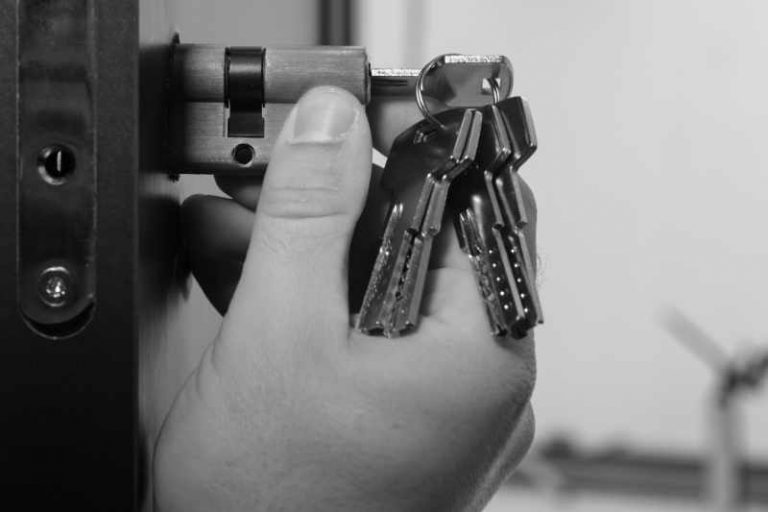
Can I Change the Locks if I am Separated?
As family law solicitors we are often asked whether it is OK to change the locks to the family home. Sometimes we are asked this question before a husband, wife, civil partner or unmarried partner has decided to separate. On other occasions, the locks have already been changed and an ex-partner has already been excluded from what was their family home.
For expert advice on family law call our team of specialist divorce lawyers or complete our online enquiry form.
Separation and changing the locks
Locks are a hot topic as emotions, trust, and control issues can all be engaged when the subject of locks and access to the family home is mentioned.
A lot of people assume that if the locks to the family home are changed that means the excluded spouse, civil partner, or cohabitee loses their legal rights or financial claims over the property. That assumption isn’t correct.
A change of locks does not confer ownership of a property on the spouse or partner who now controls access to the property. Your property rights will depend on your legal status – whether you are a spouse or civil partner or whether you were in an unmarried relationship. For spouses and civil partners, property rights stem from family law. For unmarried couples, their family home rights stem from an interpretation of property and trust law.
If you cannot agree with your partner on whether a house should be sold, or transferred to you or your ex-partner, then the court can decide on the appropriate order. In urgent cases involving domestic violence or abuse, the court can make a temporary injunction order to exclude a partner from the property. The court can then decide on long-term property ownership at a later date.
Changing the locks if you own the property
Some people assume that if they own the family home in their sole name, they can change the locks and exclude a spouse. That is not right. A spouse has a right of occupation in a family home, whether the property is owned in joint names or not. Whether or not the locks have been changed any financial claims to the house continue until there is an agreement or a family court order.
Another common assumption is that it is OK to change locks once a spouse has left the family home as once the decision to leave has been made by them then they cannot change their mind and come back. That is not correct either.
In some situations, a homeowner may ask their family law solicitor about changing locks as they want to feel in control of a property. In other cases, there are genuine worries either over privacy or personal security. If it is accepted that one spouse should leave the property then it is usual to agree that, whether they retain the key or not, they will only return at an agreed time and for a reason. For example, to collect remaining items.
If there are concerns about personal safety and domestic violence the court can make an injunction order setting out who can occupy a family home until a long-term decision is made on whether or not the house should be sold or transferred to one spouse or partner.
[related_posts]
Changing the locks when you have children
Where there are children there is often an argument that a spouse or partner should retain a key so that they can come and go to see the children. Whether that works all depends on how a couple has managed their separation. In some scenarios, both adults and children are comfortable with mum or dad returning to put children to bed with a book or to babysit but, in other families, continued key access can give very mixed messages to both adults and children and cause anxiety.
It is important to talk to a family law solicitor about property ownership and locks and to reach an agreement on whether locks are changed or not. You may need to discuss whether you or your ex-partner can get access to the property until the financial settlement is reached.
Locks and reaching an agreement over the family home
The hot topic of locks should not distract from what is often the equally emotional but trickier issue of sorting out what will happen long-term with the family home.
The obtaining of estate agent appraisals and exploration of mortgage options enables a separated couple to make well-informed decisions about what they want to happen to the family home on a long-term basis. Those decisions can be made by the couple with the help of their family law solicitor or during family mediation.
If an agreement cannot be reached then whether you are a spouse, civil partner, or former cohabitee, the family court can be asked to sort out who is entitled to enter the property and live in it on a short and long-term basis. What is important to realise is that changing the locks to a family home does not confer property ownership as that is all down to agreement or the court order.
For expert advice on family law call our team of specialist divorce lawyers or complete our online enquiry form.
Robin Charrot
Jun 13, 2023
·
5 minute read

Changes to Capital Gains Tax on Divorce
Tax is not normally something that is on your mind when you are thinking about a separation or divorce but divorce solicitors say that capital gains tax has to be considered when negotiating a divorce financial settlement.
The government has announced changes to the way capital gains tax is calculated on separation or divorce. In this article, divorce financial settlement solicitor, Robin Charrot, looks at the planned changes and explains the importance of checking out tax on divorce before you agree to your divorce financial settlement.
For expert Divorce and Financial Settlement advice call our team of specialist divorce lawyers or complete our online enquiry form.
Tax on divorce
Many people who decide to separate do not realise that the timing of their separation, or their decision to transfer assets to the other spouse or to sell assets, can create tax implications. That is why it is important that a divorce financial settlement solicitor checks any proposed financial agreement to both reality test the financial settlement and to check the net effect of the financial deal. Without legal input, what you think is an equal split may not be a 50:50 division of assets if one spouse is going to end up paying a large tax bill in the future, whilst the other spouse escapes from tax liability. The financial agreement may still be a fair financial settlement but both husband and wife must understand the net effect so they are both comfortable with the deal or can negotiate a financial settlement that does achieve equality if that is their objective.
The current tax rules on separation and divorce
Under the current tax rules, a husband and wife can transfer assets between one another without the transfer is taxable. That’s because the transfer of an asset takes place on a no gain and a no loss basis so the spouse acquiring the asset gets the item at the base cost of the spouse who is transferring the asset to them. In other words, a spouse transfer does not crystalise a gain or loss. The issue with the current tax rules for separating couples is that these capital gains tax rules only give these concessions in the tax year of separation.
That may not sound like a big problem but it is. Take the example of a couple with an investment portfolio or a buy-to-rent property. They may conclude that if the wife is to stay in the family home, then the fair financial settlement is for the wife to transfer her share of the investments or buy to let property to the husband. If the couple decides to split in late March they only have until the end of the tax year in early April to sort out the transfers. If they don’t then one of them could face an unexpected and large capital gains tax bill that they would be solely responsible for.
Even if a couple decides to separate in May (so they have almost a full tax year) they can get caught out if they do not take early legal or accountancy advice. For example, the couple could start no-fault divorce proceedings in June but not start thinking about their divorce financial settlement until many months later giving them insufficient time to give notice to transfer investments or to sort out a new mortgage on the buy-to-rent property before the end of the tax year of separation.
The government has acknowledged that tight timeframes on various tax aspects arising from separation or divorce can create difficulties and complexities so the proposed new tax regime is more generous and less restrictive.
[related_posts]
The changes to tax on divorce or separation
With effect from the 6 April 2023, there will be a new tax regime for separating or divorcing couples. If you transfer assets between spouses on or after the 6 April 2023 the no loss and no gain principle will apply to transfers that take place up to 3 years after the end of the tax year of separation. Furthermore, if the transfer takes place as part of a financial court order there is no time limit for the no loss and no gain principle.
The changes to tax on divorce or separation and the family home
If you sell or transfer a family home as a married couple there is no capital gains tax payable because of principal private residence relief. However, principal private residence can be lost resulting in unexpected tax bills.
The complexities of capital gains tax mean you both need to think carefully through the ramifications of agreeing to a mesher order on the family home. For example, a husband and wife may agree that the family home should stay in joint names until their youngest child is 18 as the spouse staying in the family home can't afford to take out a mortgage in their sole name so cannot get the house transferred to them. In reaching this type of mesher agreement the spouse who leaves the family home can, in some circumstances, lose their principal private residence relief.
The government is planning to make it simpler for couples to agree to mesher orders because the non-occupying husband or wife's share of the property will not be subject to CGT when the family home is eventually sold under the terms of the mesher order. The proposed changes may make mesher-type orders more attractive to some families, especially where there isn’t enough equity to rehouse two families or there is a particular need to delay selling the family home until the children have completed their exams.
Capital gains tax and divorce in the future
Even after the new rules come into force capital gains tax will still be payable in some scenarios when a couple separates or divorces. If you are concerned about reaching a divorce financial settlement and the tax implications it is best to get early specialist advice on your family law options.
For expert Divorce and Financial Settlement advice call our team of specialist divorce lawyers or complete our online enquiry form
Robin Charrot
Sep 15, 2022
·
6 minute read

Splitting Up in Lockdown
Is family arbitration the best option to reach a financial agreement?
If you are going through a separation or divorce during the latest COVID-19 lockdown you will undoubtedly be worried about how you will reach a financial agreement with your ex-husband, ex-wife or former partner. You may also be concerned about rising infection rates and your safety in physically attending a financial court hearing. Alternatively, you may be worried about delays in achieving a court date because of the impact of COVID-19 on the family court system. In this blog we look at whether family arbitration is the best option to reach a financial agreement if you are splitting up in lockdown.
What is family arbitration?
Many couples who are in the process of splitting up have not heard about family arbitration. That's because couples tend to reach a financial agreement through solicitor negotiations, financial court proceedings or family mediation or a combination of the three options.
In family arbitration you and your partner jointly appoint a family arbitrator. The job of the arbitrator is to make a financial settlement decision. That decision will be final and binding on both of you.
A family arbitrator is therefore like a private judge of the family court as both have the authority to decide on what is a fair financial settlement and make a binding decision.
What decisions can a family arbitrator make?
A family arbitrator can be asked to decide a financial settlement or a property disputes or some children issues arising from either a married or an un-married family relationship.
What are the advantages of family arbitration during the COVID-19 lockdown?
The advantages of family arbitration apply generally, whether the UK is in lockdown or not. However, the global pandemic emphasises some of the real benefits of family arbitration such as:
You can arrange an arbitration hearing in a place that is convenient to both of you and even online if you prefer. You may feel more comfortable in attending the venue for an arbitration meeting instead of going to a family court for a financial settlement hearing
When choosing a family arbitrator, you can check their availability and timescale to hold a family arbitration hearing. If you start financial settlement court proceedings, you don’t get that luxury as you just have to accept court and judge availability and that can be impacted by COVID-19
The use of family arbitration can be more discreet and confidential than traditional court proceedings
One family arbitrator will make all decisions, so you won’t experience having as series of court hearings with different family judges
You and your partner can adapt the family arbitration process to suit your circumstances so, for example, you could agree that you don’t need a directions hearing or that you want the family arbitrator to have a specific type of family bundle of papers and documents to help make their decision, whereas family court rules on paperwork in financial settlement proceedings are far more prescriptive.
Is family arbitration suitable for everyone splitting up in lockdown?
In some situations, family arbitration isn’t suitable. For example, if you need an injunction order to stop your husband or wife from selling off or transferring assets to try and defeat and thwart your financial settlement claims.
Alternatively, family arbitration may not be suitable if you need third party disclosure, for example, from a trust fund or a relative, and they won’t provide disclosure or cooperate in the family arbitration process.
Will a financial settlement be different if family arbitration is used rather than financial court proceedings?
Whether you use financial court proceedings or family arbitration to reach a financial settlement the family court judge or family arbitrator will exercise their discretion when determining what financial court order or arbitration award to make.
When a family law judge or family arbitrator exercises their discretion, they do so using the factors set out in the Matrimonial Causes Act 1973. This means that the financial court order or family arbitration award should be within the same range or band of reasonable orders whether court proceedings or family arbitration is used by you to reach a financial resolution.
[related_posts]
What is the arbitration process?
If you decide that you want to use family arbitration to reach a financial settlement it is important that both you and your spouse or partner understand the arbitration process.
The arbitration process is as follows:
An application form is completed. The form is referred to as an ARB-1
The family arbitrator’s fees are agreed. Whilst you will need to pay a family arbitrator the family arbitration process may nonetheless be cheaper than traditional court proceedings because you may be able to conclude the arbitration process more efficiently and without the need for as many hearings
There is a family arbitration directions hearing. This type of hearing looks at preliminary matters. If a husband and wife agree that this type of hearing is not necessary, then this can be avoided. Alternatively, the preliminary issues could be dealt with by solicitors and the family arbitrator by email. Family arbitration gives more flexibility than a financial court order application over the financial settlement process
There is an arbitration hearing. The hearing could take place online because of concerns about rising infection rates and COVID-19 or could be facilitated at a solicitor’s office or at a neutral venue, such as the offices of the family arbitrator. In some cases, a husband and wife may agree that the family arbitrator should make their decision solely based upon reading the paperwork supplied. After either reading the documentation or listening to the husband, wife or partner the family arbitrator will make a decision, called an award. This is a binding decision
The court will be asked to make a financial court order in accordance with the terms of the family arbitration award. A formal order is normally needed in a financial family arbitration to implement the family arbitration award. There is a fast track court procedure available to quickly convert an award into a court order.
If you want more information about family arbitration and how it may help you and your partner reach a financial settlement during the COVID-19 imposed lockdown then it's best to speak to specialist divorce and financial settlement solicitors about arbitration and your options.
Our Manchester and Cheshire divorce solicitors
The friendly team of specialist divorce solicitors at Evolve Family Law can provide legal help with your separation and divorce proceedings, as well as your financial settlement. For all your family and private client law needs call Evolve Family Law or complete our online enquiry form.
The Evolve Family Law offices are located in Whitefield, North Manchester and Holmes Chapel, Cheshire but we also offer remote meetings by appointment by video call or telephone.
Louise Halford
Feb 04, 2021
·
6 minute read

What is Coercive Control and Behaviour?
The law allows you to apply for a family law injunction order if you have experienced coercive control and behaviour. In this blog, our family law solicitors look at what is meant by coercive control and behaviour.
If you need family law advice, contact Evolve Family Law.
What is coercive control and behaviour?
Coercive behaviour is:
Any act designed to force or coerce you into doing something against your will,
An act that is intended to harm or intimidate you.
Acts can include physical threats as well as other forms of humiliation or words said by your partner that make you feel as if you are no longer in control of your life or actions.
The law on coercive behaviour
The law says coercive and controlling behaviour is an act designed to make you feel subordinate or dependent on your partner. This could involve:
Isolation from friends and family.
Preventing independent acts or thoughts.
Regulation of behaviour.
Examples of coercive control and behaviour
Here are some examples of real-life coercive behaviour:
Controlling what you eat and weigh (you may be told that this is for ‘your own good’, but it is still coercive and controlling behaviour).
Stopping you from having a shower or bath at times other than stipulated.
Preventing you from leaving the family home on your own or stopping you from seeing your friends and family.
Restricting your access to money so you only get an allowance to buy food and must account for any money spent by you.
Telling you that you can’t pick up the baby or play with the children other than at times allowed.
Telling you that you can’t go online or monitoring your computer and telephone usage.
Dictating what clothes you should wear (either too modest or too flamboyant for your taste) or saying what make-up you can wear (if any).
Coercive control can occur remotely. Some of the most intimidating coercive behaviour can be carried out by bombarding someone with text messages and phone calls, or remote spying activities.
Coercive control and who it affects
Coercion and control does not just affect women in heterosexual relationships. Women can also coerce and control their male partners or husbands. Coercion and control also occur in same sex relationships.
If something amounts to coercive and controlling behaviour, then it doesn’t matter if you are married, in a civil partnership or cohabiting and living together. It is the act or behaviour that is important rather than the legal status of your family relationship.
If a partner is controlling, their behaviour may also affect the children. For example, they may not give the children appropriate freedoms for their age, or the children may be emotionally affected by witnessing the coercive control exercised by one parent over the other.
Recognising Coercive Behaviour
Coercive and controlling behaviour can be insidious and hard for you or your friends and family to spot. That is because the coercion can be subtle or the degree of control can grow slowly over time, so you don’t recognise it for what it is. For example, getting you to agree that it is too much hassle to see your mother every week, to eventually telling you who you can and can’t see.
When you are in a relationship, or you are a close friend or family member, it can be hard to spot or recognise coercive behaviour, often because it is dressed up as ‘only wanting to do what is best’ or because it is said you are so stupid or mentally unwell that your partner or husband or wife knows what is best for you.
What one person would describe as coercive and controlling behaviour may be the normal experience of a husband, wife or partner who is so used to such controlling behaviour that they have become immune to it and adapted their life and thought processes around their partner’s behaviour so as not to upset them or to fit in.
It is often only when you see your husband, wife, or partner starting to exercise the same coercive behaviour on your child, and you see the impact of that behaviour on your child’s demeanour and personality, that you realise that you have got to do something. In other families, it takes a close friend or family member to point out that what your partner sees as loving behaviour is stifling you and is coercive behaviour.
In the past, you could only get a judge to make a family law injunction order if there had been domestic violence involving a trip to the hospital or doctor. Those days are long gone, with family judges realising that any form of domestic violence, from serious sexual assault to a slap or a push or coercion, is unacceptable.
What can I do about coercive behaviour in my relationship?
If you are being subjected to coercion and control in your relationship, you can:
Try to get your partner to see their behaviour for what it is and to change. This may involve counselling to get to the root cause of the coercive behaviour. In some family situations, the nature of the coercive control is such that it is not safe or healthy for you to stay in the relationship. Counselling and trying to stay together may not be a realistic option, as you need to leave the family home and separate permanently.
Separate and start divorce proceedings. You can initiate no-fault divorce proceedings without needing to mention the behaviour in the divorce application. It is still important to tell your divorce solicitor about the behaviour. They can talk to you about your injunction options.
Separate and start injunction proceedings. The family court makes an injunction order. The court can either make a non-molestation or an occupation order to protect you and your children
Make a complaint to the police. The Serious Crime Act 2015 created a new criminal offence of controlling or coercive behaviour in an intimate or familial relationship. If your partner is found guilty, then in a serious case of coercive behaviour, they could be sent to prison for up to five years.
What is a non-molestation order?
A non-molestation injunction order is a family court order that stops the person who is behaving in a coercive or controlling manner towards you or your child from continuing to do so.
What is an occupation order?
An occupation injunction order is a family court order that prevents the person behaving in a coercive or controlling manner towards you or your child from continuing to live at the family home or from re-entering it, or restricts your partner or spouse from certain rooms in the family home.
Breaching an injunction order
If your partner or spouse breaches a family court injunction order, it constitutes contempt of court and a criminal offence.
You might also be interested in
[related_posts]
Talking to your divorce and family law solicitor about coercive behaviour
If you take the step of deciding to speak to a divorce solicitor about your marriage or relationship, it is essential to tell them about the coercive control. Many people are too embarrassed to talk about their partner or spouse’s behaviour, or they decide that their partner’s behaviour isn’t relevant because they don’t want to apply for an injunction order.
Even if you don’t want your divorce solicitor to act on the coercive behaviour information and apply for an injunction, it is still important to tell them about it so that they understand why you may have concerns about your children having contact and why you want a child arrangements order or why you may want a financial settlement that includes a clean break financial court order.
How Evolve Family Law can help you
The family law solicitors at Evolve Family Law will support you during your relationship breakdown and help you find the best long-term family solutions for you and your family. Our family lawyers are approachable and friendly, providing expert divorce, children and financial settlement advice, with experience in advising on separations or divorces where a partner has been abusive or is narcissistic and controlling.
Contact Evolve Family Law Today for Expert Family Law Advice.
Louise Halford
Oct 03, 2020
·
7 minute read

What is Emotional Labour in Marriage and Divorce?
The Sunday Times recently ran a piece on ‘emotional labour’ and here at Evolve Family Law that sparked a debate about what emotional labour is and to what extent it plays a part in UK divorce proceedings. If you aren’t sure what emotional labour is and how it could affect your divorce proceedings then read on.
What is Emotional Labour?
Apparently the term ’emotional labour’ first began to be used back in 1983 to describe repressed feelings and emotions at work. Whilst we may not have head of the term we have all bitten back a sharp comment or retort to a work colleague at one point or other, knowing that a sarcastic reply won't help with the need to work together. Fast forward to 2020, and the term emotional labour is now being used in the home environment. I am sure all of you will have suppressed your first thoughts and replies when asked about whether you want the bins taken out, the dishwasher emptied or what time the meal will be ready for as your other half has plans for the evening (that don’t include you).
Emotional labour isn’t just about suppressing your first response to your partner when asked if you want the dishwasher emptied when there are no clean cups or plates in the cupboard and you have just come off a ten hour shift with your other half and the children looking expectantly for their evening meal. It is also about all the other things in a relationship that can quietly drive you crazy as you feel obliged to hide your true feelings for the sake of your partner’s feelings and/or the children’s feelings. Examples include:
Having to have the mother in law to Sunday dinner each week when she clearly can't stand you and never reciprocates with an invitation back
Always having to select the children’s birthday presents but not say anything when the children assume that the present was chosen jointly
Taking sole responsibility for taking the children to rugby practice when you can't stand sport or the biting wind, and would also much prefer a Sunday lie in (like your partner) having worked hard all week and not being the parent who’d encouraged the child to try for a place in the rugby team in the first place.
Do any of those examples ring true in your relationship? Our Manchester divorce solicitors say that it is often only when the decision to separate has been made that either a husband or wife will realise and acknowledge that they are doing the work of two people in the relationship.
[related_posts]
Does Emotional Labour Lead to Divorce Proceedings?
Whilst you don’t currently hear husband or wife's saying that they are getting divorced because of ‘emotional labour’, it is undoubtedly the case that emotional labour is behind some marriage breakdowns and the commencement of divorce proceedings based on the unreasonable behaviour of either a husband or wife.
Can anything be done to stop emotional labour and the breakdown of a marriage? Divorce lawyers are positive that in the right scenario there is help available such as:
Family or couple therapy to discuss how you feel and the need for change
Individual therapy to help you accept your husband or wife's behaviour and the fact that they aren’t likely to change
Professional help to ease the load on one partner in the relationship, whether that is a housekeeper, cleaner or au-pair.
If you can't stop the emotional labour (and can't live with it) then it may prompt divorce proceedings. The divorce proceedings could be based on your partner’s unreasonable behaviour as, in 2020, it is clear that a relationship needs to be if not an equal division of work and home labour then at least a fair one so one partner doesn’t feel they are hard done by and has to suppress emotional labour as that isn’t healthy for the individual and will eventually lead to the start of divorce proceedings unless the problem can be acknowledged and change occurs.
At Evolve Family Law we are grateful to the Sunday Times for giving a name to ‘emotional labour’, something that we are all aware of and with an understanding of just how pernicious the problem can be when you are caught up in a long standing relationship where one partner’s feelings and emotions just don’t count.
Online and Manchester and Cheshire Divorce Solicitors
Manchester and Cheshire based Evolve Family Law solicitors specialise in family law and divorce proceedings. If you need legal help with family law, from divorce to your financial settlement or childcare arrangements, call Evolve Family Law or complete our online enquiry form to set up a meeting, video conference or telephone appointment.
Louise Halford
Sep 07, 2020
·
5 minute read

Can Maintenance Payments Change Because of Coronavirus?
Coronavirus is making us look at every aspect of our lives, from how we socialise and exercise to how and where we work. With constant talk of hospital admission figures and mortality rates many of you are worried about raising your fears about coronavirus and financial concerns. However, whether you pay or receive either child maintenance or spousal maintenance , payments of maintenance may need to be reviewed and resolved. In this blog we look at child support, spousal maintenance and the impact of coronavirus.
Online family law and maintenance solicitors
Cheshire and Manchester based Evolve Family Law solicitors are working online to advise existing and new family law clients on all coronavirus related family law questions from child contact, help with leaving an abusive relationship during lockdown or the financial issues arising from Covid 19. If you need legal assistance call us or complete our online enquiry form to set up a video conference or telephone appointment.
Coronavirus and spousal maintenance and child support payments
When you agree to pay or to receive an amount in spousal maintenance or child support it is often assumed that the amount you are expected to pay, or that you will receive, won't change all that much . However, whether it is spousal maintenance or child support, the amount you pay or receive in financial support can be reviewed either upwards or downwards.
Many of you are very worried about coronavirus and your jobs or fear that your income from self-employment will reduce drastically (if not disappear altogether) over the next few months. Whilst the government has assured us all that financial help is at hand, for both the employed and the self-employed, there are reports that people are confused about the eligibility rules for government help and are worried about how they can pay spousal maintenance or child support now.
If you are the person who is receiving the maintenance payment it is equally worrying as many feel that they are in an impossible position, having taken out mortgages and financial commitments, on the basis of promised or ordered spousal maintenance or child support.
Spousal maintenance orders and Covid-19
Spousal maintenance is either paid on a voluntary basis between husband and wife or civil partner or under a spousal maintenance court order.
If you are paying or receiving spousal maintenance under a court order then the first thing that you should look at is the wording of the financial court order and the spousal maintenance clause. If you are in any doubt about the wording or meaning of the spousal maintenance clause then it is best to take legal advice.
There are a number of ways in which spousal maintenance court orders can require the payment of spousal maintenance, such as:
Joint lives spousal maintenance – spousal maintenance is payable until the death or the re-marriage of the person receiving the spousal maintenance payments
Time limited spousal maintenance – spousal maintenance is paid for a set period of time and then stops on a date specified in the court order. In some cases, the person receiving the spousal maintenance can apply to extend the length of time that spousal maintenance is paid for but they have to apply to court to extend the length of time that spousal maintenance is paid for prior to the expiry of the order. In other court orders the spousal maintenance is said to be time limited with no option to extend the length of time that it is paid for.
Can spousal maintenance orders be changed?
Spousal maintenance orders can be changed by court order or by agreement. If your financial circumstances have changed because of coronavirus and you are paying or receiving spousal maintenance the government is urging you to try to reach an agreement with your ex-partner over spousal maintenance.
Family law solicitors say that whilst it is important, if possible, to reach an agreement over changes in spousal maintenance payments any agreement should be temporary or a holding agreement until the Covid 19 position is clearer.
Every family situation is different so you may need specialist legal advice on what to do about spousal maintenance payments. Some payments may need to stop and others may need to reduce or increase. Here are two case examples:
A dentist is no longer able to work but because he has an employer who is continuing to pay him then the spousal maintenance can continue at the same rate for the time being. The spousal maintenance might need to reduce or stop if the employer is forced to stop the dentist’s salary or the salary is reduced to the cap set by the government coronavirus income scheme
A National Health Service consultant is not affected financially by Covid 19 but his ex-wife has lost her job in the travel industry. Depending on her circumstances her spousal maintenance may need to increase on a temporary basis until she can get another job. If her spousal maintenance is a time limited order she may need to ask the court to extend the period of the spousal maintenance court order.
Tips on how to change spousal maintenance payments by agreement
In these highly unusual times the focus is on working together. That is the message that the government is giving when it comes to sorting out the changes to child care , spousal maintenance or child support that are required because of coronavirus.
Tips on how to change spousal maintenance payments by agreement include:
Communicate with your ex either directly, through a trusted friend or your family solicitor. If you don’t tell your ex what is going on and be upfront about how Covid-19 has affected you financially then they will expect the spousal maintenance payments to continue
Provide paperwork – family law solicitors say there is often an element of mistrust between separated spouses and so if you want your ex-spouse to agree to a reduction in spousal maintenance you will need to provide the supporting paperwork to show that you have lost your job or that your hours have been reduced or a bonus scheme scrapped
Reflect on any discussions with your ex and don’t be rushed into making long term decisions. After all your ex-spouse may get a new job or the government scheme may mean that their income isn’t as badly affected as first thought. You should not agree to any major changes in the spousal maintenance order or agree to the cessation of payments and cancellation of the spousal maintenance order without first taking legal advice
Record your agreement – if you are able to reach a spousal maintenance agreement with your ex-spouse then you need to record the agreement in case one of you changes your mind. If there is no clear recorded agreement then your ex could apply to court to enforce the spousal maintenance order and ask for payment of arrears of spousal maintenance. They may not be successful in that court application if there is a clear agreement drawn up by you (or your solicitors) that spousal maintenance is being changed temporarily and the reasons why and when spousal maintenance will be reviewed again, for example, if the payer gets a new job or a government income subsidy
Understand the court options- it is important to know that if your ex-spouse won't agree to a reduction or temporary stopping of spousal maintenance what your legal options are. You could apply to court to vary the spousal maintenance order to reduce or stop the payments. Your ex-spouse could apply to court for payment of arrears of spousal maintenance and to enforce the spousal maintenance order. The court decision would be based on all the circumstances of your case and the ability of the paying person to pay spousal maintenance. If you are upfront with the paperwork relating to the change in income this may make a court application to formally vary the spousal maintenance order unnecessary.
[related_posts]
Can child maintenance be changed?
Covid-19 and the financial fallout and economic downturn will affect child support payments as well as spousal maintenance orders. In most families child support is either paid as a voluntary arrangement between you and your ex-partner or under a child maintenance service assessment. It is rare for there to be a child support court order as the court only has limited jurisdiction to make child support orders.
Again family law solicitors are recommending that parents talk to one another about child maintenance and to see whether the child support needs to be changed because of a change in the payer’s financial circumstances. If the payments are made under a child maintenance service assessment then you may need to ask the agency to carry out a new assessment.
Online family law and maintenance solicitors
Cheshire and Manchester based Evolve Family Law solicitors are here to answer all your family law questions whether it is a coronavirus related family law question, child contact, help with leaving an abusive relationship or financial issues arising from coronavirus. If you legal help call us or complete our online enquiry form to set up a video conference or telephone appointment.
Louise Halford
Apr 08, 2020
·
8 minute read

Help During the Coronavirus Outbreak if You’re in an Abusive Relationship
If you are in an abusive relationship then you may think that during the coronavirus outbreak there is no help available and that you’re ‘’on your own’’. Although all this talk of self-isolation and social distancing may make you feel like that, the message from family law solicitors is that ‘’you are not alone’’. There is help available during the coronavirus outbreak if you are in an abusive relationship. In this blog we look at your legal options if you are caught up in an abusive relationship and need help to get out of it during the coronavirus outbreak.
Online domestic violence and family law solicitors
Although law offices may be closed because of Covid-19, Cheshire and Manchester based Evolve Family Law solicitors are working online to support those at risk of domestic violence needing help to leave an abusive relationship during the Covid-19 lockdown. If you need legal assistance call us or complete our online enquiry form to set up a video conference or telephone appointment.
Coping in abusive relationships during the coronavirus outbreak
If your partner is abusive towards you then it is difficult enough to cope when life is ‘’normal’’. For many the fact that partners are now either working from home or not able to work, and so are based at home full time, is particularly hard. There is no escape from home for you to visit friends or family or go off to work.
Tensions can also be increased by your partner’s health or financial anxieties about Covid-19, their lack of ability to go to the pub or to the gym to meet up with their friends and the presence of the children twenty four hours a day at the family home.
The government has said that it wants Covid-19 to bring out ‘’the best in us’’. That is a laudable aim but sadly domestic violence organisations and family law solicitors know that, for some families, domestic abuse may increase because of having to spend so much time with a partner. Alternatively, partners who haven’t previously been abusive may snap and either lash out or become very coercive and controlling.
When you hear that the police are cracking down on people leaving their homes it may make you reluctant to leave or seek help from domestic violence organisations or family law solicitors but, coronavirus or not, if you are in an abusive relationship you should seek help.
Those people who are contacting us about abusive partners are often reluctant to acknowledge the extent of the abuse and prefer to minimise some of the partner’s behaviour, especially if it falls short of physical violence and involves coercive control such as:
Dictating what you can eat
Saying when you can watch the TV and what programmes you can watch
Checking your mobile phone or internet usage
Restricting when or if you can go out for your daily exercise or for essentials like food shopping
Forcing you to have sex
Not allowing you any freedom within your house by insisting on being in the same room as you
Listening into your phone calls to friends and family.
As the restrictions on the movement of people continues in force because of the Covid-19 pandemic the sort of coercive controlling behaviour that you could cope with when one or both of you were out working can become intolerable. However, there is help available.
Help if you are in an abusive relationship
The police, domestic violence organisations, the family courts and online family law solicitors are continuing to offer help to those trapped in an abusive relationship.
If you or your children are at risk of immediate harm then you should call the police. The police understand that the risks of domestic violence are increased during the current crisis. They may be able to arrest your partner. If the situation is so serious that you can't wait for the police to arrive you can leave with your children as the authorities will accept that leaving an abusive relationship is an emergency and that is an exception to the requirement to stay indoors.
In addition to the police there are various domestic violence organisations who are open and available to help and offer support:
The National Domestic Violence Helpline – 0808 2000 247
The Men’s Advice Line – 0808 801 0327
The Mix, information and support for under 25s in the UK – 0808 808 4994
The National LGBT+ Domestic Abuse Helpline – 0800 999 5428
The Samaritans – 116 123
In addition to police and domestic violence organisation help the family court and domestic violence solicitors are open to help you if you need court protection in the form of an injunction order.
[related_posts]
Injunctions against domestic violence during the Covid-19 outbreak
You may have read that most courts and public offices are closed. Whilst that is correct the family courts are open for remote emergency hearings including applications for:
Non-molestation injunction orders
Occupation orders
Emergency child arrangements orders and other types of children orders to safeguard and protect children.
Therefore, if you are in an abusive relationship, there is help available from the family court. Don’t worry that you may not be able to get to see a family law solicitor. Even prior to the coronavirus outbreak many family law and domestic violence solicitors were used to taking instructions by phone appointment or video conference and used to conducting court hearings remotely.
That isn’t to say that things are a bit of a challenge but if you need help then both the court and family law solicitors are just a phone call away.
If you need protection then a family law injunction order may be your best option. There are two types of family law injunction order:
A non-molestation order – to stop your partner from being physically violent or aggressive or verbally abusive or exerting coercive control over you
An occupation order – to stop your partner from returning to the family home (if he/she has left but is threatening to return to the family home) or to make your partner leave the family home or to restrict him/her to certain parts of the family home.
The court and family law solicitors also recognise that you might need help if you are living with extended family and are being subjected to domestic violence or coercive control or that you may need help with your children and need the security of a children order, such as
A child arrangements order
A specific issue order
A prohibited steps order.
It is often the case that people suffer in silence when they live with an abusive partner or they think that what they are coping with isn’t ‘’bad enough’’ to get help. Since the Covid 19 rules on restriction of movement have come in many have thought that they are trapped in an abusive relationship for the duration of lockdown. Domestic violence organisations, the police, courts and family law solicitors are saying that domestic violence and abusive behaviour isn’t right in any circumstances and that if you need help then call.
Online family law solicitors
The specialist family lawyers at Evolve Family Law can help you if you are in an abusive relationship and you need legal help. Call us or complete our online enquiry form for a video conference or telephone appointment.
Louise Halford
Apr 06, 2020
·
7 minute read

The Psychology of Escaping a Narcissistic Relationship
By guest blogger Anoushka Macin of Balance Psychologies
You have decided or it may have been decided for you that you no longer want to stay in a relationship that is tormenting you. Leaving a narcissistic relationship is one of the hardest things to do. In my work with clients and with my online community I provide lots of information to people who find themselves with a narcissist or toxic individual. Here is how to get out safely with your wellbeing intact.
When we fall in love it’s natural to attach and form a romantic bond, but once in love with a narcissist it is not easy to leave let alone detach from them.
Why it’s hard to break up with a narcissist
Pathological narcissists or people with narcissistic traits present as charming, interesting and seductive to be around and will treat you with kindness and warmth. They may even love bomb you. This is where the dysfunctional attachment to the narcissist begins. I am not saying that it is wrong that you are being treated with kindness, charm and respect at the beginning. Of course you want to be with them but you become easily dependent on their attention and validation of you.
Once you are hooked onto this they become secure and then they aren’t motivated to be nice to you. Their charm, warmth and respect fades and is replaced or intermixed with varying degrees of criticism, demands, coldness and emotional abuse. You become accommodating and try to win their love and attention back and meanwhile your self-esteem and independence of mind are compromised. You may even become gas lighted and begin to doubt your own decisions and perceptions due to blame and lies. When you question this you become attacked, intimidated and confused by manipulation.
Over time you learn to accept the abuse or even attempt to avoid conflict and become deferential. Because facing the reality is too painful. To leave is the only option as this behavior becomes a cycle of abuse and unfortunately you are too weak and vulnerable to be able to do anything about it. You cannot save them, only yourself. Below are some tips and strategies that may help you to cope and heal after leaving a narcissistic relationship.
Go no contact - limited no contact
Block them! I mean of all your communication avenues. That means phone, email and social media. You need some time to yourself to ‘breathe’ and get your thoughts in order. You are not going to be able to do that if you have constant abuse through secondary sources. The narcissist will try to contact you! You have to cut off this communication, you need some time to get your mind in order.
Now, this may not be as straight forward if there are children involved, so what I suggest here is limited contact. I feel that at the beginning of this process do go no contact but only when you are ready begin with limited contact and it needs to stay like that. So, what does limited contact look like? It will mean that you have to clarify what it is that you are communicating with the narcissist, be specific and stick to only the facts that you want to get across. Take the emotion out of the content that you are talking about, this will give you the advantage. Please know that the narcissist will use your triggers and emotions against you to trip you up and get what they want. As these interactions are about gaining power over you and controlling the conversation, to do that they need to initiate an emotional reaction out of you and will press your buttons. Be wise to this and prepare yourself accordingly.
Join a support group
It is really important at this time that you have support of people that understand and care for you. Having to explain your decisions to people who do not get it, is not good for you to be around them at the moment. You need to surround yourself with people who give you positive validation. Finding a therapist might be a good idea too.
Become more autonomous
To heal and move forward from an abusive relationship it is helpful to build a life outside of the relationship that includes separate friends, hobbies and other interests. When you leave you will need a fulfilling life to supplement or replace the relationship. You will need to surround yourself with positive things that will help you to heal and remind you that there is a life outside of this person and relationship.
Build your self esteem
This is very important, you will need all the strength that you need. It is important to reconnect with yourself and get to know you all over again. In relationships such as these your identity would have been compromised and diminished, therefore reconnecting to your own needs and values is important to build your inner strength. You will need to learn to become more assertive and build boundaries.
Learn how to nurture yourself
This follows on from the last point of reconnecting with yourself. Learning your needs and putting them first. This is really important if you have children as you will be teaching them to value themselves and to build a robust connection to self. This is a life skill and will insulate you from the abuse.
Grieve
Please allow yourself time to grieve the relationship and false future promises that were made to you in the relationship. This will help you to process your emotions and recover from the relationship. I would also urge you to find an experienced Manchester divorce solicitor who has the understanding and experience of dealing with narcissistic personalities. Mediation is not a good option where there is a history of abuse.
As long as you’re under the spell of the narcissist, they have control over you. In order to become empowered you will need to educate yourself. Come out denial and see the reality of what this really is. Information is power. Read up on narcissism and abuse, I have a lot of information on my website. Regardless of your decision, it is important for your own mental health and to redeem your autonomy and self-esteem.
By guest blogger Anoushka Macin of Balance Psychologies
[related_posts]
guest blogger Anoushka Macin of Balance Psychologies
Feb 24, 2020
·
6 minute read

Is Islamic Marriage Valid in the UK?
A divorce court ruling on a Sharia law marriage has called into question the validity of Sharia law marriages conducted in the UK. You may question why that is important to you as, after all, if you celebrated an Islamic marriage ceremony, witnessed by all your friends and family that is what counts as you are married in the eyes of God.
Whilst our Manchester divorce solicitors would not disagree with the significance of the marriage ceremony to you, in the English family court you may not be legally married. Your status as a husband or wife or as a cohabitee could make the difference between whether you get half the family wealth or nothing if you separate.
The case of Mr Khan and Mrs Akhtar
The legal status of Islamic marriage in the UK is in the news headlines again because of the long running case of Mr Khan and Mrs Akhtar. In the high court Mrs Akhtar sought a divorce from her husband, Mr Khan. He opposed the divorce petition on the basis that they weren’t legally married. Although you would have thought it obvious that they were married because the couple had participated in a Nikah ceremony in a London restaurant conducted by an Imam with about 150 guests, Mr Khan said the marriage wasn’t legal as whilst it might be a legal marriage under Sharia law it did not meet the requirements of English marriage law.
The first judge ruled that the marriage was a marriage but classed it as a void marriage. This decision allowed Mrs Akhtar to start financial proceedings as the wife of Mr Khan, something that she could not have done if the high court had ruled that the couple were not legally married. Although the court ruled that the marriage was still a marriage (even though it was void) back in 2018 it has taken until February 2020 for the court of appeal to hear the case and conclude that the couple were not legally married under English law.
Interestingly the appeal wasn’t brought by Mr Khan but by the Attorney General who is joined as a party to court proceedings where the validity of a marriage is called into question. The court of appeal ruling is making Manchester divorce solicitors ask where the decision leaves Mr Khan, Mrs Akhtar and their four children and, just as importantly all those other husband and wife's who have celebrated a Nikah marriage ceremony recognised in Sharia and Islamic law but not under UK marriage law.
Is an Islamic marriage valid in the UK?
The court of appeal held that the marriage of Mr Khan and Mrs Akhter was invalid (rather than void) and therefore the Islamic marriage isn’t a legally recognised marriage, notwithstanding the 150 guests who attended to witness the marriage ceremony.
The court of appeal ruled that the Sharia law wedding wasn’t a valid marriage because the ceremony took place at a venue that isn’t registered as a wedding venue and therefore no registrar was therefore present to conduct the ceremony. Back in 2018, the high court took a different approach and ruled there was a valid marriage recognised in both Sharia law and under English case law because although the couple hadn’t complied with English marriage law requirements they both held themselves out as a married couple. The court of appeal said that this wasn’t enough as they both knew that they needed to participate in a registered civil marriage ceremony to comply with English marriage law.
[related_posts]
Does it matter if your Islamic marriage isn’t recognised in the UK?
You may question whether it matters if your Islamic marriage isn’t recognised in the UK family law as a valid marriage because, from your perspective, it is your marriage under Sharia law that is the important ceremony to you and your family. However, if you separate and you try to start divorce proceedings you may find yourself in the same position as Mrs Akhtar; told that there is no need for English divorce proceedings because you are not legally married under English law. That means, that for the purposes of your financial settlement, in English family law you will be treated as a cohabitee or unmarried partner.
If your marriage is legally recognised then within divorce and financial proceedings a husband or wife can bring financial claims for a share of:
The family home
Any other property you own – this property includes houses or commercial property owned in your joint names or in your sole name
Your business – your spouse does not need to hold shares in your company or to have worked in the business to be able to make a financial claim against business assets
Your pension – your spouse can claim a share in your pension even if your pension was set up prior to your marriage
Your savings and investments – your husband or wife can claim a share of your savings and investments even if they are owned in your sole name
Your income – a claim can be made for the payment of ongoing spousal maintenance.
By contrast, if you are an unmarried partner or cohabitee you won't be able to claim:
A share of your partner’s pension
Spousal maintenance
Any other assets unless you can prove that you are an owner of that property or that you were promised a share in the property.
If you have children with your partner you can try to claim housing provision and child support for your children but Manchester divorce solicitors say it is a lot harder to bring a financial claim if you are a cohabitee rather than a husband or wife whose legal status in recognised in English law.
What should I do if I have an Islamic marriage?
If you have an Islamic marriage and you are concerned that your marriage won’t be legally recognised in English law it is best to take legal advice from a Manchester divorce solicitor. A discussion about your legal relationship status does not commit you to making any decisions and is completely confidential.
Islamic marriages and prenuptial agreements
If your husband or wife does not want to participate in a legally recognised marriage ceremony because they appreciate the extent of the financial claims that can be made by a husband or wife on separation (in contrast to an unmarried partner) then one option may be to look at signing a prenuptial agreement to record a fair financial settlement should you separate at a later date. It is vital that you take expert legal advice before committing to sign a prenuptial agreement.
If you are concerned about the status of your Islamic marriage then whether or not you are contemplating a separation or starting civil divorce proceedings you should take legal advice on your situation and options. The specialist divorce law team at Manchester divorce solicitors at Evolve Family Law in Whitefield can help you.
Call our Whitefield divorce solicitors or complete our online enquiry form.
Robin Charrot
·
6 minute read
Can't find what you're looking for?
Getting in contact with Evolve Family Law could not be easier.
We put a lot of legal information on our website and if you have a single question about your situation, you should find an answer in our blog here.
If you need a greater level of help, please use this form and one of our team will call you to make an appointment. Please note that we cannot offer Legal aid.
Unfortunately due to the level of single question enquiries we receive, we cannot guarantee to provide written answers to individual questions posted via this enquiry form.
1
Call us on 0345 222 8 222
2
Email us at info@evolvefamilylaw.co.uk
